
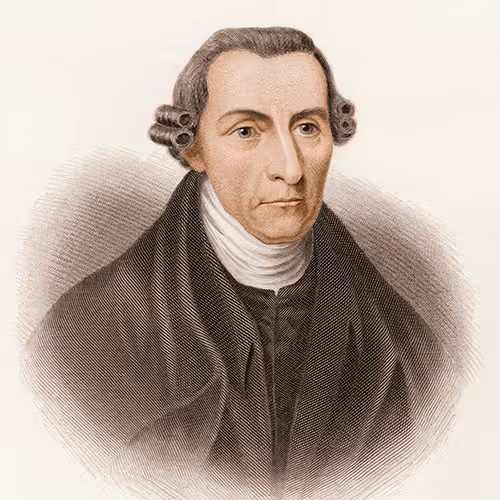
Patrick Henry
May 29, 1736—June 6, 1799
The eternal difference between right and wrong does not fluctuate, it is immutable. - Patrick Henry
The founding fathers touted some very intense individuals, but Patrick Henry was one of the fieriest among them. Thomas Jefferson called Henry "the man who gave the first impulse to the ball of revolution." Known for his fierce but compelling oratory, Patrick was a staunch champion of Independence and prepared to die for its cause.
Henry began to make a name for himself during his time as a lawyer. Initially, he tried his hand at storekeeping and farming, but both ventures failed. His growing family necessitated a change, and this new responsibility spurred him on: Henry had a rudimentary education and tutoring from his father, but he persevered and taught himself law, passing the Virginia bar, much to the amazement of his peers. He was among the first to raise his voice against the British government's violation of the colonists' rights.
Henry was dedicated to the cause of American independence. His patriotism inspired the most famous words he would deliver in the coming war: "Give me liberty or give me death!" He backed his words with his actions. Henry organized a volunteer militia in Virginia and later worked with General George Washington to raise and equip troops for the war, taking responsibility for seeing his own call to arms through to its practical end.
After the war, Patrick continued to be involved in shaping the new nation. Henry favored strengthening the Articles of Confederation instead of creating a new constitution. Therefore, when it came time for Virginia to decide whether it would ratify the new Constitution, Henry led the opposition of the document. Henry practiced deliberation, concerned that, though the document claimed to be for the people, it provided for a centralized government that would be unable to live up to its end. In the end, Patrick's oratory was not enough, and the Constitution was ratified by the states. When some of his friends met to organize resistance to the new government, Patrick reminded them that they had done all they could and that, "as true and faithful republicans, they had all better go home!" Patrick's good judgment compelled him to trust the newly established process rather than incite any sort of rebellion and sow greater discord, a responsibility he felt for the nation's stability, in the young nation, even after losing the argument he cared about most. Once the Bill of Rights was passed, Patrick was more comfortable with the new government. Henry exited politics as his health ailed and attempted to return in 1799, but he died just after his victory.
A passionate defender of liberty, Patrick Henry is remembered as one of America's great early patriots. Although a fiery orator, Patrick was deliberative in his actions and understood the consequences of going to war. In and out of the war, Patrick worked for a well-organized nation and continued his duty to serve it until his death.