Jane Addams
1860—1935
America's future will be determined by the home and the school. The child becomes largely what he is taught; hence we must watch what we teach, and how we live. - Jane Addams
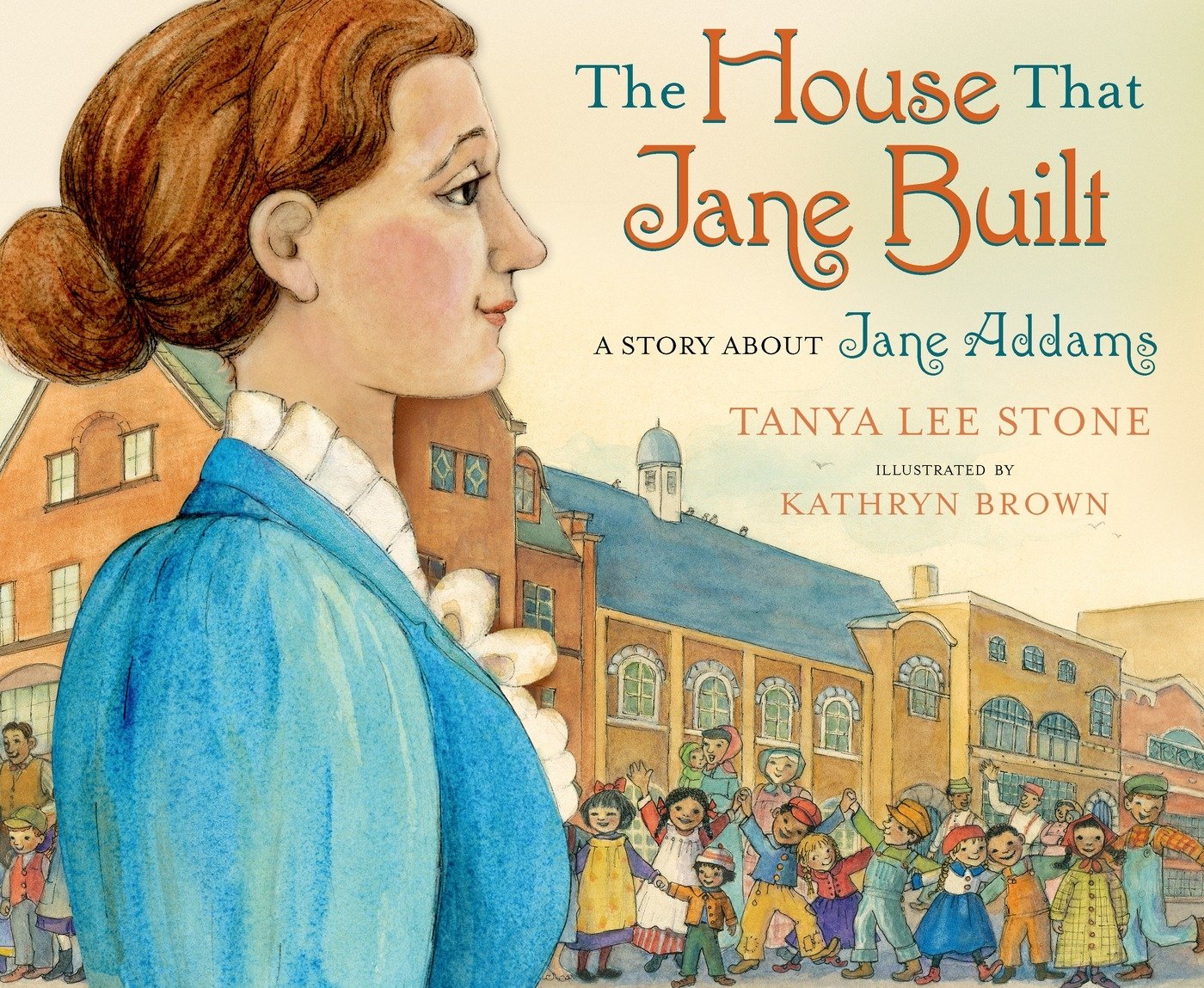
Jane Addams was born to privilege, but from an early age felt the weight of others' suffering as her own. A carriage ride with her father through Chicago at age six opened her eyes to the appalling living conditions of the city's immigrant poor. She told her father then and there that she would buy the finest house in that neighborhood — not to rise above it, but to live among its people, understand their burdens, and help carry them. Her life's work became exactly that.
In 1889, Addams co-founded Hull House, a restored mansion in the heart of Chicago's multi-ethnic industrial district, as a home for residents who would live alongside and serve the surrounding immigrant community — Italian, Polish, German, and Russian families struggling to make their way in a new land. Hull House offered everything from childcare and English classes to meals, medical help, classes on nutrition, sanitation, sewing, and bookbinding, as well as concerts, discussion groups, and shelter for victims of domestic abuse. This was kindness in its fullest sense: not mere sympathy, but a sustained effort to identify and supply the true needs of her neighbors, alleviating real suffering through real action.
Her generosity was equally remarkable — and the Core Virtues definition is precise here. Generosity is not measured by the amount given, but by the willingness to give. Addams gave not only her resources but her life, choosing to forgo the comforts of the privileged world she was born into in order to pour herself out for those most in need. The settlement house movement she inspired spread to more than 500 homes in major American cities by 1920, a testament to how generosity, when it is genuine and wise, multiplies beyond what any one person can contain.
What set Addams apart was also her deep respect for those she served. She did not come to the poor as a benefactor dispensing charity from a distance, but as a neighbor — living among them, learning from them, and honoring their human dignity. She understood that to truly help someone, you must first see them clearly and treat them as an equal. This same respect animated her sense of responsibility — her conviction, rooted in the very nature of democratic life, that the well-being of Chicago's immigrants was bound up with the well-being of all. As she wrote, "The good we secure for ourselves is precarious and uncertain...until it is secured for all of us and incorporated into our common life." She was not merely a philanthropist; she was a steward of the common good, fulfilling what she understood to be a genuine obligation to her community's shared flourishing.
That commitment demanded perseverance. Hull House was not a single act of generosity but a decades-long endeavor sustained through financial strain, public opposition, and the grinding difficulty of the work itself. Addams gave herself to this mission for over forty years, and the movement she built outlasted her own lifetime. She did not surrender to weariness, and she did not mistake difficulty for a reason to stop.
Jane Addams believed that democracy was not merely a form of government but a way of life — one that called every citizen to see and serve the needs of their neighbors. "The cure for the ills of democracy," she said, "is more democracy": more people helping people, more lives turned outward toward the common good. Her path forward lay in "mixing on the thronged and common road where all must turn out for one another, and at least see the size of one another's burdens." Her own life was the proof of that conviction.