Anne Sullivan Macy
1866—1936
A strenuous effort must be made to train young people to think for themselves and take independent charge of their lives. - Anne Sullivan Macy
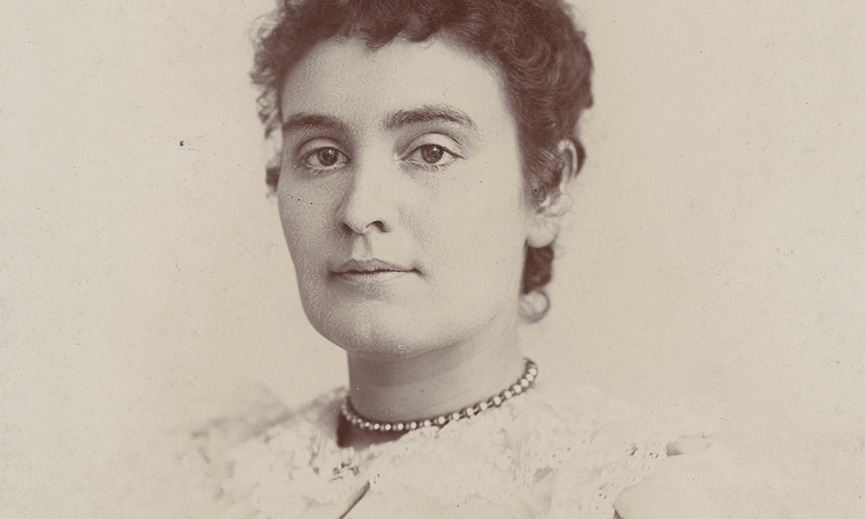
Anne Sullivan was born into poverty in Massachusetts, the daughter of Irish immigrants, and her early life was marked by loss and hardship that would have broken many. Her mother died when Anne was young. Her father abandoned her and her younger brother Jimmie, and the two children were sent to the state poorhouse at Tewksbury — a grim institution where Jimmie soon died, leaving Anne utterly alone. She was nearly blind herself, having contracted a painful eye infection in childhood that multiple operations failed to correct. She had every reason to expect very little from life.
Through sheer perseverance — refusing to surrender to the weariness and discouragement that her circumstances invited — Anne fought her way to an education. She talked her way into Perkins School for the Blind, arriving barely able to read, and graduated valedictorian of her class. That ascent, from the poorhouse to the top of her graduating class, was not luck. It was the fruit of steadfastness through genuine sorrow and adversity: clinging to what was good, striving for what was possible, and refusing to be defined by what had been done to her. Later operations improved her vision, but she did not allow her partial recovery to become an excuse to leave behind those who still suffered as she once had. She turned back toward them instead.
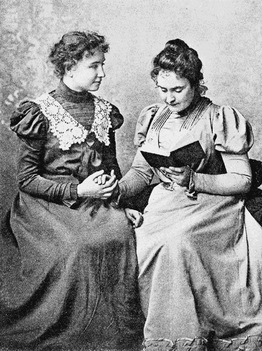
In 1887, just one year after her graduation, Anne was hired as teacher and governess to seven-year-old Helen Keller — a child who was both blind and deaf, effectively locked inside herself, and considered by many to be beyond reach. What followed was one of the most remarkable educational relationships in history, and it began with a single act of courage: Anne's willingness to take on a task that others had given up on, to enter a situation of profound difficulty and uncertainty, and to keep going when the early weeks offered little encouragement and considerable resistance. Helen was wild, ungoverned, and furious. Anne did not retreat.
Her kindness toward Helen was not mere affection — it was the sustained, practical effort to identify and supply Helen's true needs, even when Helen herself could not articulate them and even when meeting them required real struggle from both of them. Anne understood that true kindness works toward others' genuine good rather than their immediate comfort, and she held to that understanding through forty-nine years of teaching, companionship, and care. She taught Helen to read, to speak, to study, and ultimately to earn a degree from Radcliffe College — a achievement that astonished the world and that would have been impossible without Anne's lifelong generosity: the willingness to pour out not merely her professional skill but her time, her health, her vision, and her entire life in service of another person's flourishing.
That relationship deepened over the decades from teacher and governess into something richer and more equal — a genuine friendship in the fullest Core Virtues sense. Anne did not merely serve Helen; she loved her, saw her good as bound up with her own, and sustained the bonds of fellow-feeling through every difficulty life brought. She stood by Helen through grief, through public triumph, through personal hardship, and through the long years of her own declining health. When Anne's eyesight deteriorated severely in her later years, Helen — who had once been the student — became her companion and guide in return. That reciprocity is the mark of true friendship: not a transaction, but a shared life.
Her responsibility to Helen was total, but it was freely chosen and faithfully kept. Anne understood herself as a steward of something entrusted to her — not only Helen's education, but her full human flourishing — and she gave what was due to that charge without reserve. The Core Virtues definition emphasizes that responsibility means fulfilling one's obligations to the community's shared purpose and sustained well-being. Anne's community, for most of her life, was Helen — and she served that community with everything she had.
Anne Sullivan Macy's life is a testament to what devotion, rightly ordered, can accomplish. She arrived at Perkins with almost nothing and left a legacy that changed the world's understanding of what is possible for the disabled and the disadvantaged. She did not do it by being exceptional in circumstances — her circumstances were often terrible. She did it by being exceptional in character.