
Developing the Moral Imagination Through Black Beauty
by Michele DiCristoforo, 3rd Grade Teacher
Reading rich Classical literature stocks the minds of children and adults alike with a vast wardrobe of memorable images that enable us to understand the world and guide us in knowing how to act. Stories cultivate the moral imagination, enabling human beings to have a sensorial experience of virtue and providing a strong moral anchor throughout life. Good Classical stories shepherd human souls as they encounter good and evil, guiding human beings to be drawn to that which is naturally good, true, and beautiful.
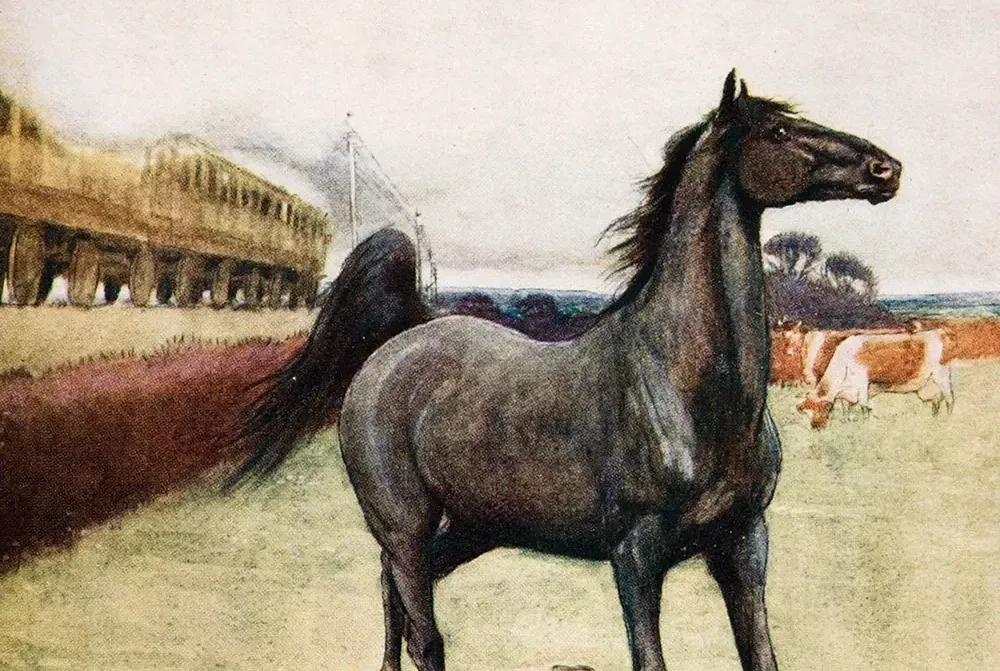
One beloved work of Children’s Literature that provides a feast of images to nurture the moral imagination is Black Beauty by Anna Sewell. Through this autobiographical account, readers walk alongside Black Beauty as he encounters challenges and injustice in the world. As we embody images from his journey, the storehouse of pictures grows richer, developing the moral imagination as a compass to direct us in our decisions.
In the very first chapter of Black Beauty, his mother provides a moral anchor for him through her wise advice. He frequently recalls his mother’s words as he navigates new and challenging experiences. His mother says the following to him: "I hope you will grow up gentle and good and never learn bad ways; do your work with a good will, lift your feet up well when you trot, and never bite or kick even in play.” When Black Beauty faces adversity, he frequently reflects on his mother’s wisdom, which serves as a moral compass for him during his life. When he wants to kick and bite an unjust master, for example, he recalls her words and is able to govern himself and make prudent decisions.
While learning how to properly govern himself, Black Beauty helps the reader understand the virtue of moderation more fully. He must learn the habits of self-control and patience as he is broken in and learns to wear the necessary equestrian tack, such as a crupper, horseshoes, and a check rein. While being trained, Beauty was privileged to ride in a double harness with his mother. She continues sharing her advice in saying, “The better I behaved, the better I should be treated, and that it was wisest always to do my best to please my master.” She explained that he will have virtuous and unvirtuous masters and must always strive to do his best to maintain a good reputation. His moral anchor is rooted in the virtue of justice as he learns to value respect and responsibility to his master.
Throughout the novel, Black Beauty observes humans displaying vice. A plowboy named Dick unmercifully threw stones at a group of horses. In learning to practice prudence, a possible discussion question might be “What could you say to Dick right before he threw the stones?” As readers envision this horrible scene, this image also forms the moral imagination, giving the reader a picture of how humans behave when they do not use good judgment and think before acting.
When characters witness injustice in Black Beauty, they often speak up to the unvirtuous individuals. They display respect for the animals being abused and speak honestly to the necessary officials. This practice of justice also requires courage, as one must be brave enough to share the truth, even when afraid. One of Beauty's grooms, Joe Green, observed horses straining to pull a cart out of the mud that was heavily laden with bricks. The carter proceeded to shout at the horses while forcefully flogging them. Joe attempted to stop this brutal behavior by speaking to the man. When this intoxicated individual did not respond, he galloped on Beauty to the master brick maker. Eventually, Joe Green is summoned to court to testify against the carter. It took courage and a deep sense of justice to respond in the right way to the cruelty he witnessed. Joe Green spoke to Black Beauty, saying, “We won’t see such things done, will we, old fellow?”
Once again, we receive images of courage and justice to add to our wardrobe, guiding us in understanding evil in the world and how we should respond to it.
As Black Beauty and the other horses in the novel face adversity, an important element that sustains them is friendship. Black Beauty befriends Merrylegs and Ginger at his first home at Birtwick Park, where they become companions. Through their ongoing conversations, we witness the virtue of justice and how gratitude and kindness are essential in forming lasting relationships. Readers observe how benevolent treatment transformed Ginger from an ill-tempered horse to an obedient one. The camaraderie Ginger experienced shaped her character, drawing her toward good behavior. Practicing virtue both individually and in relationships helps us become better human beings.
Readers of Black Beauty travel with him throughout his life, experiencing his joys and tribulations. Filling the reader’s wardrobe with vivid images shapes the moral imagination as the transcendental virtues of courage, moderation, justice, and prudence become tangible through a very good story. Just as Beauty frequently recalls his mother’s advice, the reader is also sent forth with a stock of images of how to be a good human being. Through the power of the moral imagination, Black Beauty reaches the heart of the reader, bestowing upon each person a stock of stories and images that will not be forgotten.