
Creating a Culture of Virtue: Why a Classical Curriculum is the Bedrock
by Margaret Ruwe, Grammar School Assistant Headmaster
Anyone invested in the success of a classical school and its community, whether a teacher, leader, or parent, will find themselves grappling with the question of what it takes to build a school culture that is genuinely, deeply rooted in virtue. The younger the school, the more daunting the task. Inevitably, introducing language about virtue can sound old-fashioned at best or out of touch at worst to students and parents who have not yet been immersed in the kind of education and community that classical schools are trying to cultivate. Even though the concept of moral virtue, or virtue ethics, has had a small resurgence recently, most of the language used to discuss what it means to be a good person ends up sounding rather hollow, focusing on self-improvement and throwing in a few catch phrases or buzzwords. Where is the teacher or leader at a newly established classical school to begin? Thankfully, they won’t have to look far, as the key to building a culture of virtue is embedded in the curriculum itself.
As the leader of the grammar school (kindergarten through 5th grade) at a classical public charter school in southern Indiana, I grow increasingly grateful for the richness and beauty found in the stories we read and the heroes we encounter with our students daily. It takes years to build a healthy and vibrant school culture, but no matter how old or young the school is, or what challenges it faces, the beauty of the curriculum is that opportunities to discover and name virtues permeate every subject. Sometimes, virtue hits you over the head rather forcefully in the form of a classic fable with a tidy moral lesson spelled out at the end. (Personally, my go-to Aesop fable is the slightly lesser-known “The Sick Lion,” though you can never go wrong with a classic like “The Tortoise and the Hare” or “The Boy Who Cried Wolf.”)
Other times, the discovery of virtue lies in the hands of an artful teacher reading to her class about George Washington and his rag-tag army suffering through the harsh winter at Valley Forge. Images begin to form in a young student’s mind of shivering, suffering soldiers in absolutely desolate circumstances. Yet rather than witnessing Washington and his army retreat or give in to suffering, the virtues of perseverance and courage become powerful players in the course of history. Those virtues become something real and tangible because of the vivid images and stories attached to them, and will hopefully be tucked away for a rainy day (or a difficult circumstance down the road).
Think of a 4th grader, reading Anne of Green Gables for the first time. How easy it is to laugh at the antics of our red-haired heroine, to fall in love with her and hope that she finds the true family and bosom friends her heart has always longed for. It’s less easy, but so worthwhile, to help 10-year-olds think about what it took for Anne to humble herself enough to apologize for her angry outburst to Mrs. Rachel Lynde, a notorious busybody who herself had been ungracious and rude towards Anne. One of our experienced teachers discovered, as she taught Anne of Green Gables this past year, that, in fact, not a small number of students in her class immediately and vehemently took Anne’s side, claiming that she had every right to speak to Mrs. Lynde the way she did and owed her no apology. Disheartening, perhaps, and a window into some of the cultural challenges that teachers are currently facing, but also a rich opportunity to respond warmly to students and educate them about the virtues of respect, humility, and self-governance.
I’ve been talking about curriculum and stories; let me clarify why I think this relates to building a culture of virtue within a school. I think there are two important avenues for shaping a school's culture toward virtue: one is explicit, and the other is implicit. The explicit way is talking about virtue, often and publicly. It is necessary for school leaders and teachers to use clear, explicit language when discussing the core virtues their school has chosen to focus on. That could mean memorizing a new definition for a virtue every month and publicly reciting it with the student body, putting up beautiful posters with virtues and their definitions on the walls of classrooms, and celebrating students who have demonstrated a virtue publicly through presenting a virtue card or nominating for a Virtue of the Month award, as a few examples. It might feel forced at first, but the more it is done, the more natural it becomes for the school community.
The other avenue is more subtle and lies within the curriculum I’ve already referred to. However, I think the virtues implicit in our stories, poems, novels, history lessons, and so on are the bedrock for forming a steady, sustainable culture of virtue. As the child is exposed to more and more, her moral imagination is awakened and developed, and she builds a framework in her mind that allows beautiful virtues like courage, patience, friendship, and perseverance to begin to take on concrete, tangible meaning. It becomes more common and unremarkable to talk about and name those virtues in class discussions of a novel or on the playground with friends; it becomes second nature, a habit.
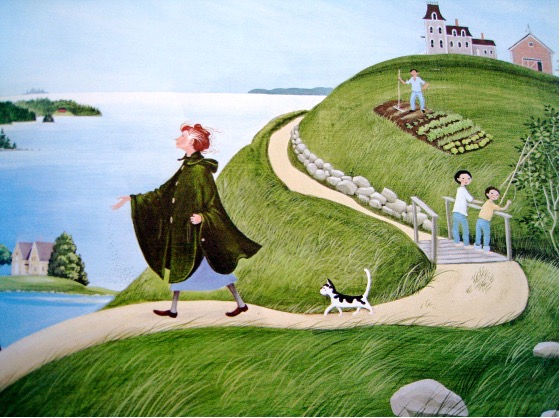
A school culture that embraces virtue will take time to grow. To reference another fable, however, slow and steady really is the way to go. In one of my favorite children’s picture books, Miss Rumphius by Barbara Cooney, the Lupine Lady (Miss Rumphius herself) has a humble but exquisite goal: to “make the world more beautiful”. She does this by scattering lupine seeds everywhere she can in her small community, and as she reaches the end of her life, she bears witness to the joy of fresh flowers and the delight of young children and people everywhere discovering what she’s left behind. Educators can take comfort in remembering the beauty and purpose of sowing seeds of virtue in a young child’s mind, whether through the content they teach or the conversations they hold, even if it will take months or years for the good work to bear fruit.