Sarah Josepha Buell Hale
1788—1879
Thanksgiving is a festival which will never become obsolete, for it cherishes the best affections of the heart- the social and domestic ties. - Sarah Josepha Buell Hale
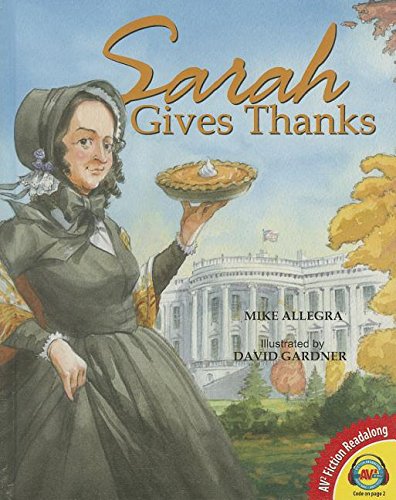
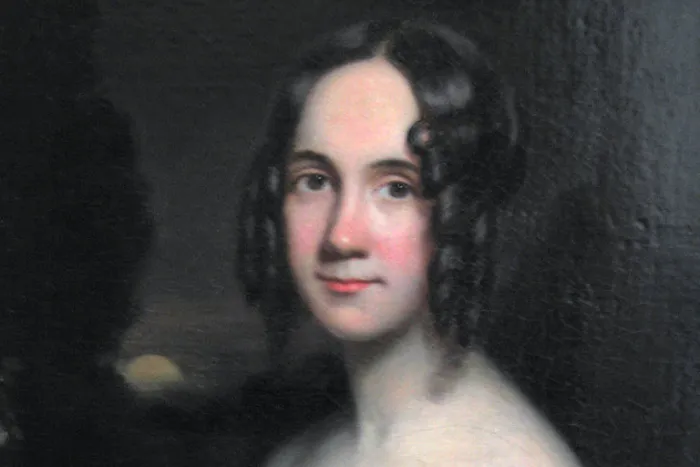
Sarah Josepha Buell Hale believed that a nation ought to stop, once a year, and give thanks. It took her nearly four decades of tireless effort to make that belief a national reality — and the story of how she did it is inseparable from the story of who she was.
Hale was born and raised in New Hampshire, educated informally but thoroughly, with a sharp mind and a gift for language that would serve her well through decades of unexpected challenge. In 1822, her husband died, leaving her a widow with five children and no obvious means of support. She did not collapse under the weight of that loss. She picked up a pen. Her perseverance began here — not on a grand public stage, but at a writing desk, a mother doing what was necessary to care for her family, pushing onward through grief and financial hardship with the quiet determination that would characterize everything she did thereafter.
Her first book of original poetry was published in 1830, and included a small poem that has never gone out of circulation: "Mary Had a Little Lamb." Her talents caught the eye of Reverend John Blake of Boston, who was editing a popular monthly Ladies' Magazine and was bold enough to ask a woman — at a time when there were no women editors in America — to take it over. Hale accepted, moved to Boston, and proceeded to boost circulation. When Louis Godey purchased the magazine in 1837, he asked her to stay on. She did, presiding as editor — or "editress," as she preferred — of the influential Godey's Lady's Book for forty years, from 1837 to 1877.
From that platform, Hale exercised remarkable responsibility toward the community she served. She understood her role not merely as a publishing job but as a stewardship — an obligation to use her influence for the genuine flourishing of her readers and her country. She recommended books and authors, championed the education of women, advocated for the restoration of historic sites, and furthered the careers of major American writers by publishing literary essays by Washington Irving, Nathaniel Hawthorne, Edgar Allan Poe, and Oliver Wendell Holmes. She gave what was due to her community, faithfully and over a very long time.
Her campaign for a national Thanksgiving holiday was a forty-year exercise in deliberation and perseverance working together. She had thought carefully about what such a holiday would mean — not merely a day off, but a source of national unity and a communal acknowledgment of the blessings of a free and bountiful land. That was the virtuous end she had identified, and she pursued the right means to it with methodical patience: writing letters, year after year, to presidents Taylor, Fillmore, Pierce, and Buchanan. They ignored her. She wrote again. Her steadfastness through those decades of rejection — clinging to what she knew to be good and worthy without becoming discouraged or giving up — is as remarkable as the eventual victory itself.
Abraham Lincoln did not ignore her. When her letter arrived in September 1863, just months after the carnage at Gettysburg, Lincoln recognized the good judgment in her proposal: that a nation torn apart by war needed, precisely then, a shared occasion for gratitude. He proclaimed the last Thursday in November an annual national holiday. The timing was not incidental — it was wise. And the wisdom had been Hale's all along.
Gratitude was, in the deepest sense, the animating virtue of her campaign. The Core Virtues definition describes gratitude as acknowledging and repaying the gifts and benefits one has received — in thought, in words, and in acts of service. Hale understood Thanksgiving as a national act of exactly that: a formal, communal acknowledgment of the gifts of liberty, abundance, and common life that Americans had received and too easily took for granted. She wanted her country to stop and say thank you. It took forty years. She did not stop wanting it.
Sarah Josepha Buell Hale's life reminds us that perseverance in good causes is rarely dramatic. It looked, for most of her life, like a woman at a desk — writing, editing, advocating, writing again — doing the work that was in front of her, year after year, because she believed it mattered. She was right.